
Methodology
Complex Problems. Composed Intelligence.
We combine the right intelligence, translate complexity into executable systems, and make every decision traceable.
01 · SOMR
Intelligence Beyond LLMs.
The right intelligence for the right problem.
Real-world decisions demand more than language understanding. Some problems require exploring scenarios, some finding optimal solutions, others learning from data or reasoning through complex information.
SOMR brings together four complementary capabilities for engineering intelligent decision systems.
Simulation
Explore what could happen.
Optimization
Find what works best under constraints.
Machine Learning
Discover patterns from data.
Reasoning
Interpret context and support decisions.
We don’t force problems into predefined models. We select the intelligence the problem actually needs.
02 · ChordX
Intelligence, Composed.
From intelligence capabilities to problem-driven solutions.
SOMR provides the building blocks of intelligence. ChordX determines how those capabilities should be selected, combined, and organized to solve a specific problem.
Different problems may share underlying structures, but their objectives, constraints, and workflows are rarely identical. ChordX starts with the problem, not with a predefined AI model or algorithm.
Inspired by how a small set of musical chords can produce countless compositions, ChordX applies the principle of composition to intelligent decision systems.
The problem determines the composition. The composition determines the system architecture.
Define → Route → Design → Compose → Validate. From understanding human needs and identifying problem structures to designing workflows, selecting methods, and validating results.
ChordX is our overarching engineering framework, connecting problem understanding, intelligent composition, and structured execution.
Problem A · Scenario-Based Planning
Simulation+Optimization
Explore scenarios and identify feasible solutions.
Problem B · Evidence-Informed Decisions
Machine Learning+Reasoning
Identify patterns and support contextual judgments.
Illustrative capability combinations only; not mandatory sequences, and not claims about deployed products.
Engineering journey
- 01Define
- 02Route
- 03Design
- 04Compose
- 05Validate
Validation and human oversight are integrated throughout the engineering process.
03 · DEP
From Ambiguity to Execution.
Turning intelligent designs into structured, testable workflows.
ChordX determines how intelligence should be composed. DEP (Decision Execution Pipeline) translates that design into an explicit, executable workflow.
Real-world problems begin with incomplete information, competing objectives, and operational constraints. Problem and Interaction Tables (PT/IT) capture the human-facing requirements before they are translated into machine-execution logic.
DEP organizes the workflow into two types of nodes:
- Decision Nodes (D). Evaluate alternatives and make structured decisions using defined decision methods.
- Execution Nodes (E). Perform specific operations such as extracting information, transforming data, generating outputs, or executing authorized actions.
Each node has a defined purpose, inputs, outputs, method, and validation criteria. Together, they form a workflow that can be tested, inspected, and adapted to changing requirements.
Structured by design. Traceable by execution.
Evidence validation, error handling, and human oversight are incorporated where the decision risk requires them.
Layer 1 · Human-facing requirements
PT / IT
Problem definition · Interaction requirements · Expected outcomes
Layer 2 · DEP: machine execution
- E1· Extract
- D1· Decide
- E2· Execute
Illustrative node sequence — actual workflows are problem-dependent.
Engineering controls across the workflow
- Contracts
- Validation
- Error handling
- Human approval
Layer 3 · Verifiable outputs
Evidence · Decisions · Authorized actions · Traceability
04 · Methodology in practice
From Frameworks to Working Systems.
Explore how SOMR, ChordX, and DEP inform the design of practical maritime AI and decision-support systems.
Each demonstration illustrates selected engineering principles, with its capabilities and development status documented on the project page.
01Scenario Simulation
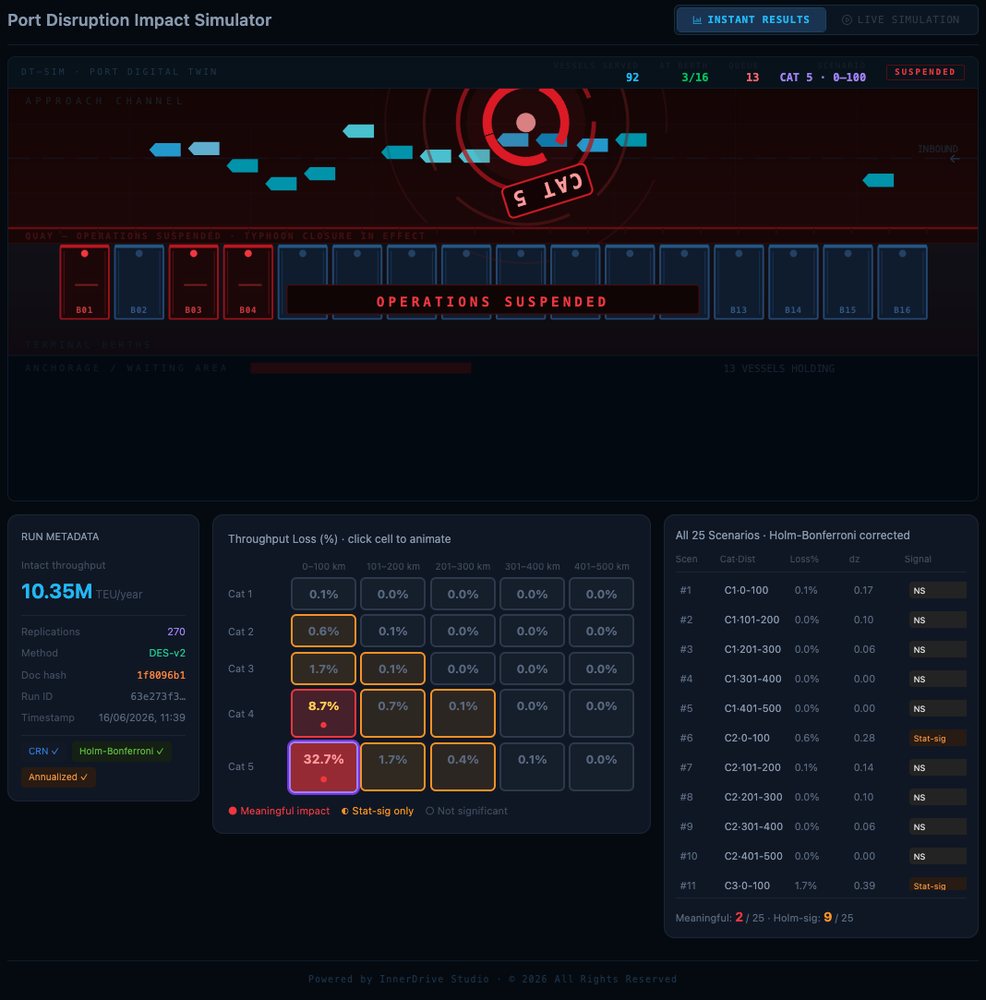
Port Typhoon Simulator
Discrete-event simulation of typhoon-induced port disruption, estimating throughput impact and economic loss.
Intelligence methods
- Simulation
02Optimization & Decision Support
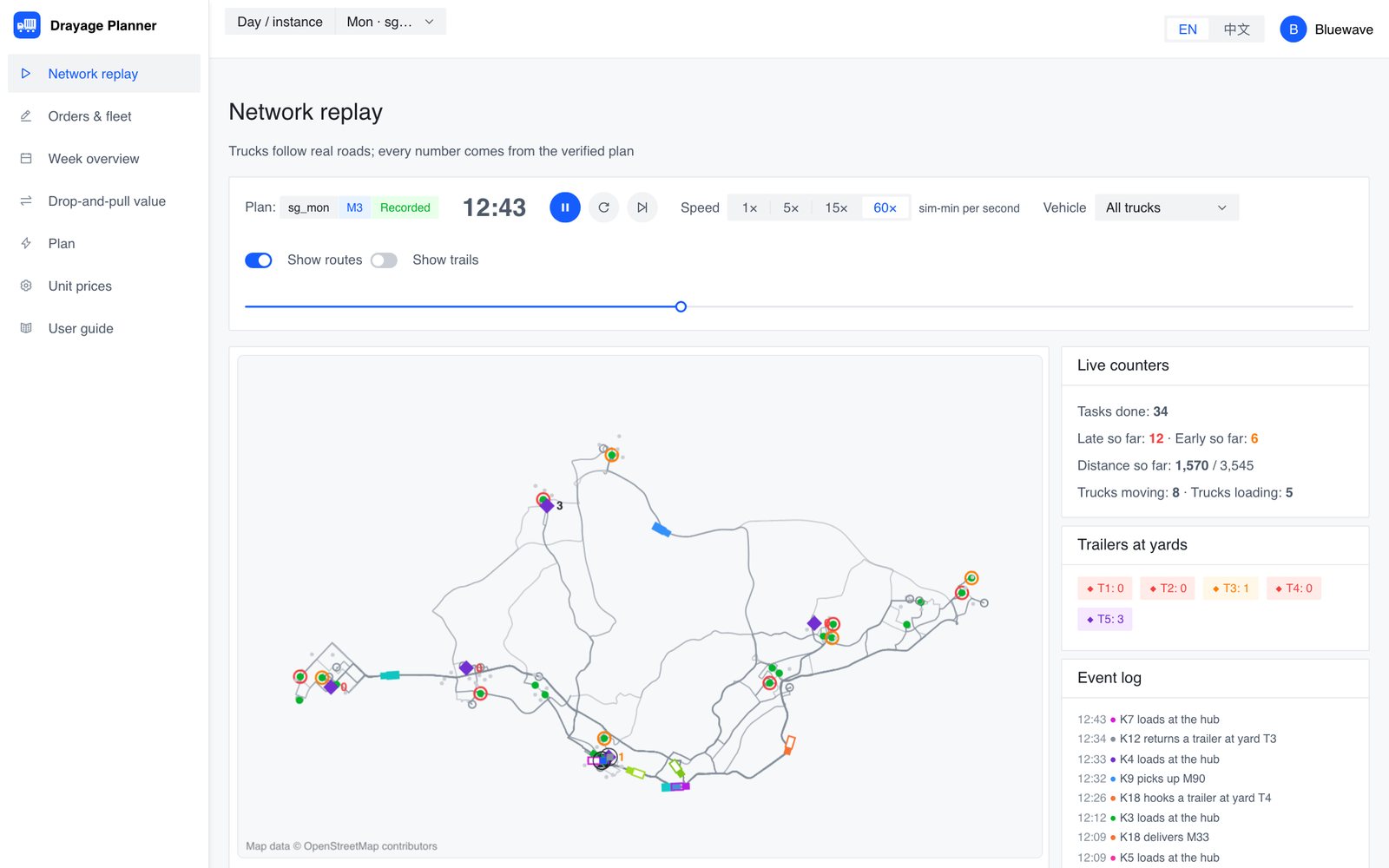
Container Truck VRP
Constraint-aware routing and scheduling, combining optimization methods with independent solution verification.
Intelligence methods
- Optimization
03Evidence-Based Review
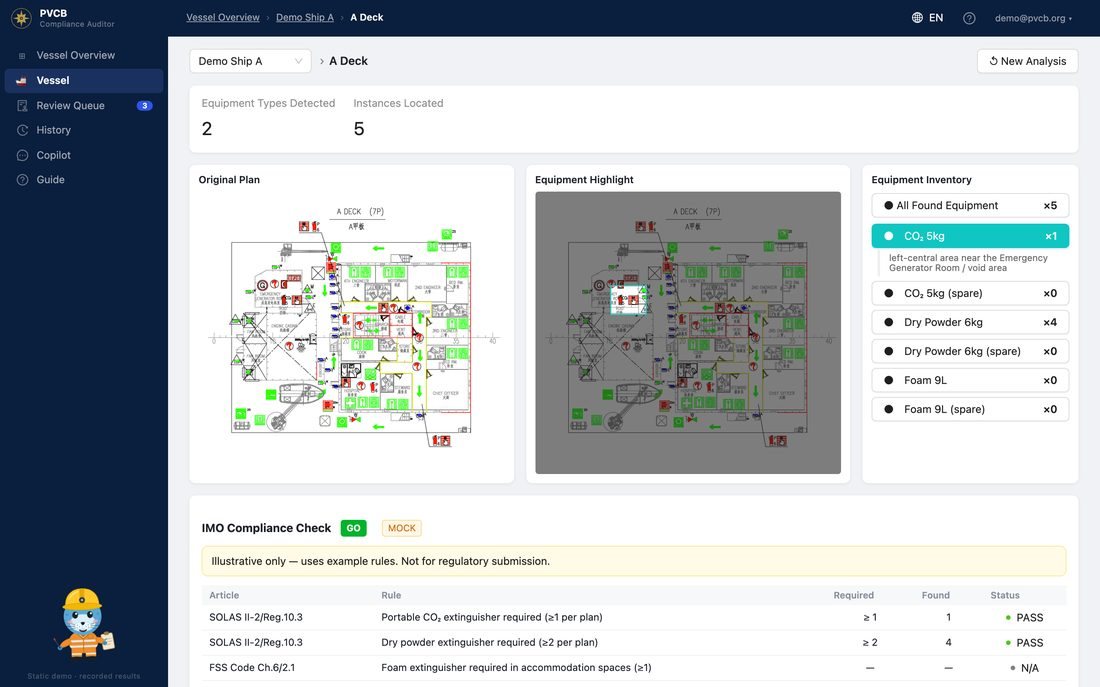
Ship Plan Compliance Auditor
Visual detection, classification, and rule-based checks with traceable evidence and reviewable outputs.
Intelligence methods
- Reasoning
04Workflow Intelligence
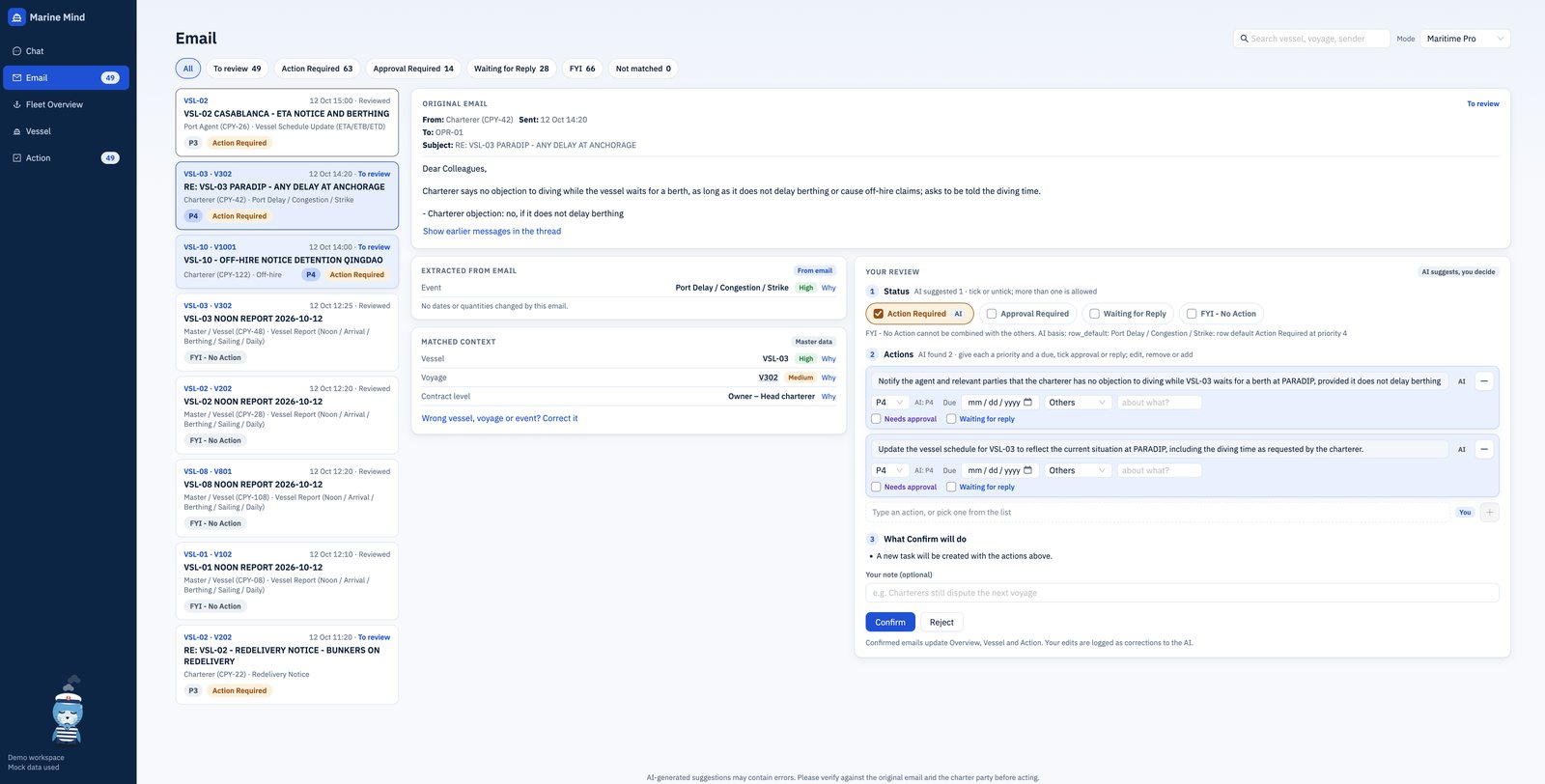
Shipping Operation Email AI Secretary
Structured information extraction, evidence-linked reasoning, and operational task tracking.
Intelligence methods
- Reasoning
Let's collaborate
Have a decision problem in mind?
From operational challenges to AI-powered decision systems, let's explore what we can build together.